The Power of Balance:
Biomechanics and Nutrition in Horses
Healthy performance in horses relies on two closely connected pillars: biomechanics and nutrition. One cannot exist without the other – and only when both are in balance can a horse achieve resilience, recovery, and long-term performance.
1. Biomechanics: the design of the engine
Movement is the result of perfect cooperation between the skeleton, muscles, tendons, and joints. Correct biomechanics allow for efficient movement and reduced injury risk, while poor biomechanics lead to energy loss, asymmetry, and strain.
You can think of biomechanics as the design of the engine, while nutrition provides the fuel. A poorly designed engine will never run smoothly, even with the best fuel. But a perfectly designed engine cannot function without it.
This interaction is what enables a horse not only to move, but to perform — and to stay healthy.
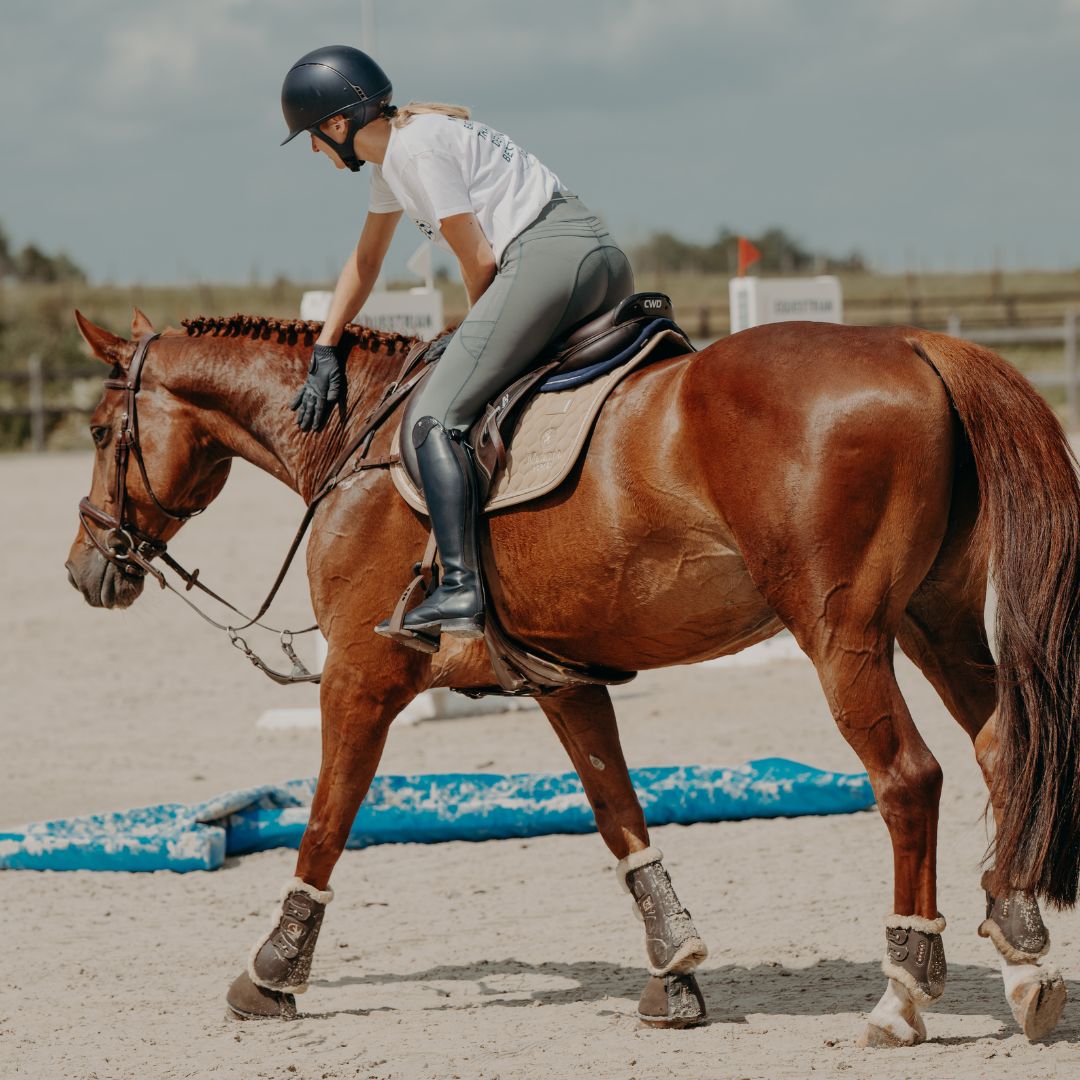
In essence, biomechanics is the study of movement. Every step a horse takes is the result of a coordinated interplay between the skeleton, muscles, tendons, and joints.
When a horse moves correctly — straight, balanced, and efficiently — the hindquarters generate impulsion, the core and topline stabilize the spine, and the forehand absorbs impact without overload.
When biomechanics are compromised — through crookedness, incorrect training, or rider imbalance — energy is wasted, asymmetries worsen, and the risk of injury increases.
2. Nutrition: the fuel and building blocks
Nutrition plays a vital supportive role. The muscles that stabilize the spine and power movement rely on high-quality proteins and essential amino acids such as lysine and methionine.
Tendons and joints, which are constantly under strain, require minerals like copper, zinc, and manganese to remain strong and resilient.
Antioxidants such as vitamin E and selenium protect muscle tissue from oxidative stress, while vitamin C supports collagen production.
Energy intake should also be adapted to biomechanical demands: a horse performing collected work or explosive jumps benefits more from slow-release energy from fibers and fats than from sugars, which often cause peaks and crashes.
3. The Interaction
Even the best diet cannot deliver results if a horse moves inefficiently.
Correct biomechanics ensure that nutrients are utilized effectively — resulting in stronger muscles, faster recovery, and better endurance.
Likewise, the best biomechanics cannot compensate for poor nutrition.
True athletic development occurs when biomechanics form the foundation, and nutrition provides the capacity to maintain training, support recovery, and build long-term resilience.
Together, they are the key to sustainable performance and overall well-being.
4. For Riders and Professionals
- For riders, trainers, and equine professionals, it’s essential to approach both aspects together.
- Start with biomechanics: evaluate straightness, symmetry, and rider influence.
- Once the movement patterns are correct, refine the nutrition plan to support the physical demands.
The result? Fit, balanced horses that perform with strength and harmony — without overstrain.
Want to learn more about this topic? Our partner Move 2 Ride is organizing a conference in November focused on the connection between biomechanics and nutrition. Discover how combining both creates healthier, stronger horses — and register today!
__
Want to know more? Get in touch!